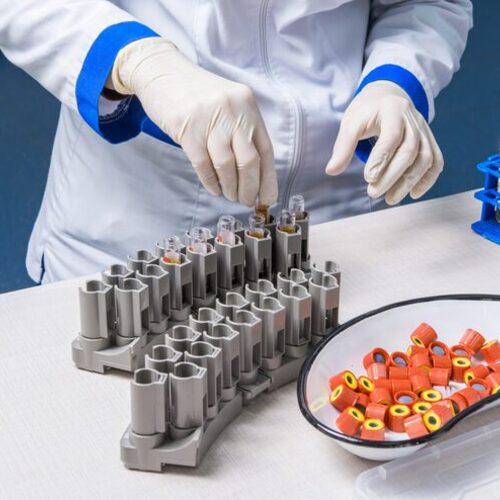
Raw Material Testing Overview
Test right. Start strong.

Raw material testing ensures APIs, excipients, and packaging components meet pharmacopoeial and client specifications, supporting downstream manufacturing, batch quality, and patient safety. Testing is performed in line with GMP and global standards to support incoming material release, supplier qualification, and regulatory compliance.
Raw Material Testing Capabilities
Every material. Every requirement.
Sciom delivers comprehensive raw material testing services to ensure quality, safety, and compliance with global pharmacopeial and regulatory standards across APIs, excipients, and packaging materials.
-
Compendial Monograph Testing: Pharmacopoeial testing in line with Ph. Eur., BP, and JP standards
-
Identity Confirmation: Verification using IR/UV spectroscopy, TLC, and chromatographic retention time comparison
-
Purity & Impurity Profiling: Assessment of related substances, residual solvents, and elemental impurities including heavy metals
-
Physical Characteristics: Evaluation of loss on drying, water content (Karl Fischer), and residue on ignition
-
Nitrosamine Impurity Testing: Detection of NDMA and NDEA using LC-MS and GC-MS methods aligned with FDA and EMA requirements
-
Method Development & Transfer: Custom method development and client method verification for non-compendial materials
-
Stability & Compatibility Studies: Assessment of excipient-API interactions and accelerated stability testing

Raw Material Testing Workflow
Structured workflow for consistent quality.
Sample Receipt & Specification Review
Intake with CoA review, storage condition verification, and specification alignment (pharmacopoeial or client method).
Test Planning
Select appropriate monograph/tests based on material type, risk profile, and regulatory requirements.
Method Execution
Perform identity, purity, physical, and specialised tests (nitrosamines, heavy metals) using validated equipment.
Data Review
Peer review raw data, chromatograms, and calculations against predefined acceptance criteria.
Material Release
Issue Certificate of Analysis or non-conformance report; support supplier qualification decisions.
Aligned with Regulatory Standards
Built to meet. Ready to pass.
Testing is performed in accordance with Ph. Eur., BP, and JP monograph requirements, as well as ICH, MHRA, and EMA expectations. Nitrosamine impurity testing is conducted in line with MHRA and EMA guidelines for mutagenic impurities.
Documentation supports supplier qualification programmes, audit trails, and CTD Module 3 requirements, ensuring readiness for regulatory submissions. All activities comply with GMP data integrity principles (ALCOA+) and 21 CFR Part 11 requirements for electronic records, with methods aligned to client specifications and regulatory expectations.

Raw Material Testing Expertise
Deep expertise. Reliable results.

Raw material testing is supported by comprehensive pharmacopoeial expertise across EP, BP, and JP monographs, backed by over 15 years of specialist experience. Advanced impurity testing is performed using LC-MS and GC-MS techniques, including analysis of nitrosamines such as NDMA and NDEA, as well as genotoxic impurities.
A full analytical suite, including HPLC/UHPLC, GC, MS, FTIR, UV, and Karl Fischer, is used to ensure accurate and reliable results. Support is provided for custom method development, validation, and client method transfer for non-compendial materials, with risk-based testing strategies tailored to material criticality and supply chain requirements.
Why Sciom for Raw Material Testing
Trusted testing. Reliable supply.
Single-site comprehensive testing: APIs, excipients, packaging – no subcontracting delays
Nitrosamine expertise: Proven LC-MS & GC-MS capability for MHRA/EMA regulatory requirements
Global pharmacopoeial mastery: Ph. Eur./BP/JP compliance with rapid turnaround
Flexible analytical support: Method development, validation, and transfer tailored to your needs
Fast & reliable results: Efficient workflows ensuring timely release of raw materials
Supply chain protection: Early impurity detection prevents costly downstream failures
Our CDMO Services
Insights & Industry Trends
Stay informed with expert insights on pharmaceutical product development, analytical services, formulation development, testing and CDMO solutions across the pharmaceutical industry.

31 August 2026
Pharmaceutical Product Development: A Guide to Reducing Risk at Every Stage
Explore Article

26 February 2026